|
All Saints' Church from the car park |
All Saints' Church The main parish church is on London Road, near Heatherwood Roundabout. It was consecrated in 1864 and we celebrated our 150th Anniversary with many events in 2014. Details about the history of All Saints' Church can be found here.
|
|
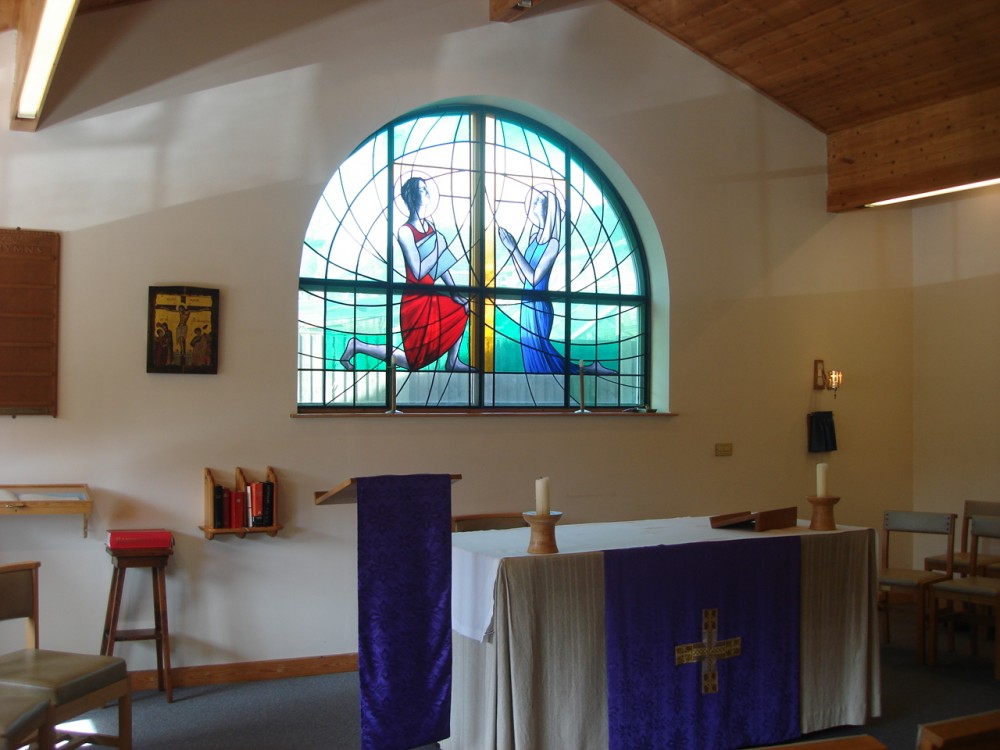
Chapel of St Mary & St John This chapel is located at the rear of King Edward's Hall in King Edward's Road, North Ascot. The 9:00 Sunday Service and Mini-Mass are regular services held here. it is a modern open plan space with a window designed by Caroline Loveys. |
|
|
Our Church Halls Both of our halls are widely used for Parish events and community activities. To book either of the halls, please contact the Parish Office. For maps of our locations, please see here. |
|
| All Saints' Hall | King Edward's Hall |
|
|
 |
| All Saints' Hall is next to the church on London Road. | King Edward's Hall is in King Edward's Road, North Ascot. |